
Baseball Card Selling Do’s and Don’ts for a Better Experience
Selling cards should feel straightforward. A lot of times, it does not.
One seller has a smooth, clean experience and gets serious interest quickly. Another has a box that feels harder to explain, harder to price, and harder to move. That difference usually comes down to preparation, card mix, condition, and choosing the right selling route.
Before you decide how to sell your baseball card collection, it helps to start with a quick value check for older cards, a practical look at what to do first with old baseball cards, and a simple guide to how vintage cards are really evaluated. That gives you a better starting point before you list anything, break anything up, or accept the wrong offer.
Do Understand That Baseball Card Collection Value Is Not the Same as an Easy Sale
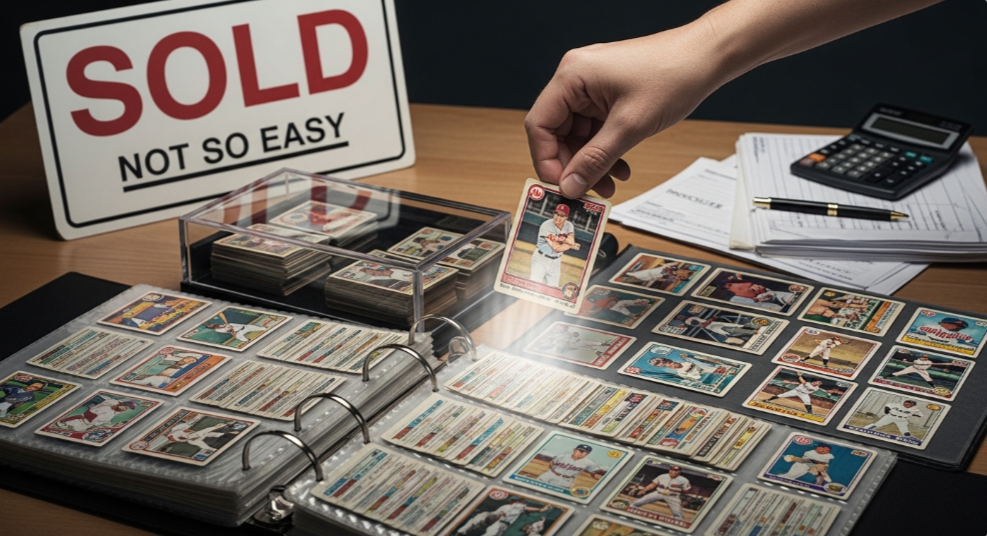
A collection can have real baseball card collection value and still be difficult to sell.
That surprises a lot of people. Sellers often assume that value should make the process easy. Buyers usually see it differently. They are also judging how much work the collection creates after they buy it.
A collection gets easier to sell when the value is easier to see:
- The best cards are obvious
- The strongest names stand out
- The era makes sense
- The condition is easier to judge
- The group feels organized instead of random
That is why a smaller group with a few real anchors can sometimes move faster than a larger box with more cards but less clarity. It is also why pre-1972 cards are especially sought after, which matters so much. Stronger eras are easier for buyers to understand and easier to price with confidence.
Do Pull Out Top Selling Baseball Cards Before You Do Anything Else
The easiest collections to talk about are the ones where the stars are easy to spot.
When buyers quickly see top-selling baseball cards, the collection becomes easier to understand. They do not have to dig through everything just to find the reason the group matters.
Start by separating:
- Hall of Fame names
- key rookies
- vintage stars
- already graded cards
- cards you know are stronger than the rest
This is especially important if you are dealing with a larger group. The best cards should not be buried inside commons or lower-interest years. That is one reason the true rookie card guide is useful before selling. It helps you recognize cards that may deserve more attention than the rest of the box.
Do Remember That How Much Baseball Cards Sell For Depends on Condition
A lot of sellers ask how much baseball cards sell for, as if the answer is fixed by player name alone. It is not.
Condition changes everything.
A card may look strong at first glance, but buyers still care about:
- corners
- edges
- surface
- centering
- gloss
- staining
- creases
- whether the card is raw or graded
That is why two cards with the same player can sell for very different numbers. It is also why some collections are easier to sell than others. Collections with cleaner condition and clearer presentation create less uncertainty.
If you want to understand why one card can bring more than another that looks similar, why similar baseball cards can sell for different prices is worth reviewing before you start setting expectations.
Do Keep Graded Baseball Cards for Sale Separate From Raw Cards
Buyers like fewer unknowns.
That is one reason graded baseball cards for sale are often easier to move than similar raw cards. A grade does not solve every question, but it removes one big area of debate.
The same rule helps at the collection level.
Do this:
- Keep graded cards together
- Keep key raw cards together
- Keep commons separate
- Keep paperwork with the correct cards
- Avoid mixing your strongest pieces into the weakest pile
This makes the collection easier to review and easier to price fairly. It also helps buyers understand whether the best value is in the graded cards, the raw stars, or the full group.
That is exactly why how buyers price bulk cards versus key cards matters before you sell. If the strongest part of the collection disappears inside the weakest part, the whole collection starts feeling heavier than it really is.
Do Treat Baseball Card Sets for Sale Differently Than Random Boxes
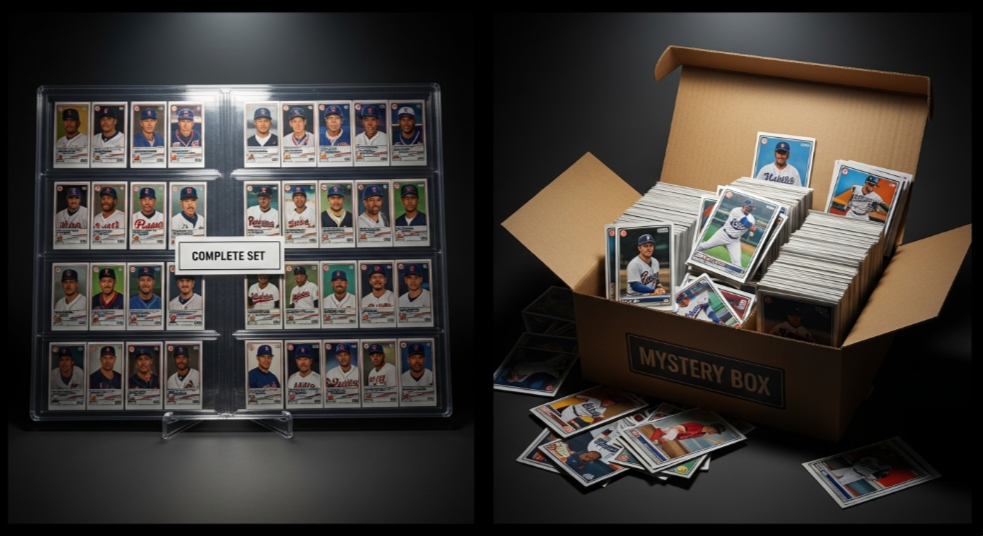
Not every group of cards should be sold the same way.
Clean runs, partial sets, and organized groups are easier to explain than loose, mixed boxes. A buyer can see the structure faster. That makes the collection easier to review and often easier to place.
That is why baseball card sets for sale can attract different interest than a random storage box. A set or near-set tells a clearer story.
It also helps you answer a key question early:
- Should this collection stay together
- Or should the strongest pieces be separated out
That is where selling a full collection versus singles becomes so useful. Some collections are stronger than one deal. Others become easier to sell once the best cards are separated from the rest.
Don’t Assume Baseball Cards That Are Worth Something Will Automatically Sell Smoothly
This is one of the most common mistakes sellers make.
They know there are baseball cards that are worth something in the collection, so they assume buyers will immediately see it the same way. A lot of times, they do not.
A collection becomes harder to sell when:
- The stronger cards are buried in bulk
- The eras are mixed too heavily
- The condition is unclear
- There is no clear presentation
- The route does not fit the collection
That does not mean the collection is weak. It just means the buyer sees more work, more uncertainty, and more time before resale.
If you want to avoid that problem, preparing your collection before a review can make a real difference. A cleaner presentation does not create fake value, but it absolutely makes real value easier to see.
Do Ask Where to Sell Your Baseball Cards Before You Start Selling
A better experience usually starts with a better route.
That is why where to sell your baseball cards matters so much. Not every collection belongs in the same lane.
A private review often makes more sense when:
- The group is vintage
- The collection is mixed
- There are grading questions
- You are unsure what matters most
- You want privacy
- You do not want to ship and list everything yourself
That is where Baseball Card Roadshows fit especially well. The company is built around one-on-one appointments, direct review, realistic guidance, and helping sellers understand the best route before they waste time on the wrong one.
You can see that clearly in North Carolina, appointments for vintage collections and South Carolina reviews for inherited and collector groups. Both show the same basic idea: the right review often comes before the right sale.
Don’t Rush a Baseball Card Collection for Sale Into the Wrong Route
A lot of sellers create problems by moving too fast.
They decide the collection is ready for listing before they know:
- which cards matter most
- whether the best pieces should be graded
- whether the collection is stronger as a whole or split up
- whether a private sale makes more sense than online work
- whether the buyer route fits the material
That is where a baseball card collection for sale can start losing strength. The cards may still be good, but the handling and route make the process worse than it needed to be.
If you are unsure, meeting with experienced buyers in person often helps more than trying to force the collection into an online-first approach that may not fit it.
Do Make the Selling Experience Easier Before You Contact Anyone
This is the simplest part, and it helps more than people think.
Before you try to sell baseball card collection material, do this:
Do:
- separate stars, rookies, and stronger vintage cards
- Keep graded cards and paperwork together
- group cards by era, set, or player where possible
- Keep the collection in original order if that order makes sense
- Take clear photos of the best material
- think about whether the collection is stronger as a whole or in parts
Don’t:
- clean cards
- over-handle older material
- break everything up too early
- price from hope instead of the sold-market reality
- Assume all cards in the box should be treated the same way
A smoother selling experience usually starts with fewer avoidable mistakes.
Why Baseball Card Roadshows Make This Process Easier
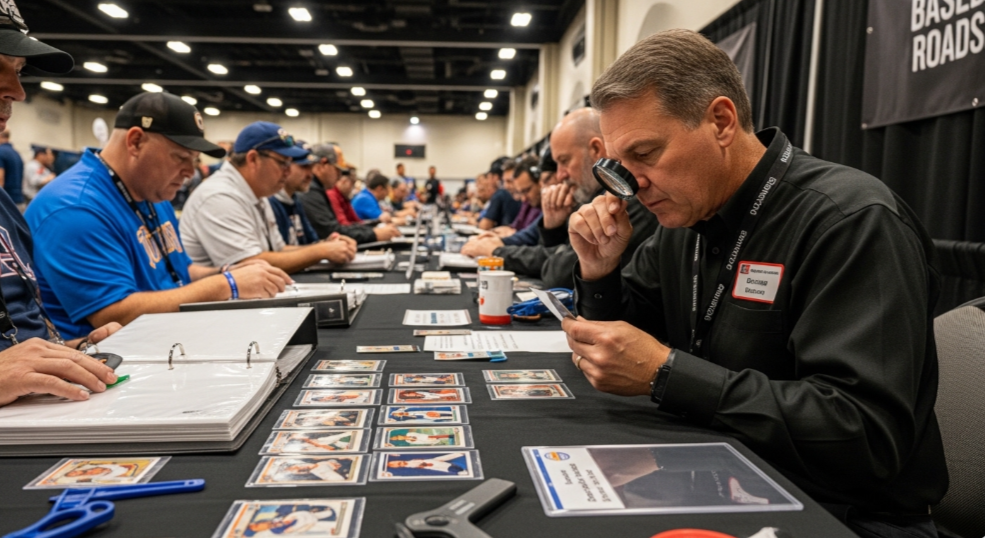
At Baseball Card Roadshows, the goal is not to treat every collection like a quick listing project. The goal is to help sellers understand what they have, what matters most, and which route gives them the better experience.
That means looking at:
- star concentration
- condition
- structure
- grading potential
- whether the collection makes more sense together or in pieces
- whether a direct private review is smarter than a longer public selling process
That is why Baseball Card Roadshows works so well for sellers who want a clearer, calmer process instead of guessing their way through it. If you are deciding on the best way to sell baseball card collection material, or just trying to avoid common mistakes before you move anything, the smartest next step is getting in touch for a private review.
In the end, the better selling experience usually goes to the seller who slows down first, understands the collection properly, and chooses the route that actually fits what is in the box.