
How to Know if an Online Offer for Your Cards Is Too Low
Getting an online offer can feel exciting for a minute. Then the second thought hits.
Was that a fair number?
Was it just a quick-cash number?
Or was it a low offer dressed up like a good deal?
That is the hard part of selling baseball cards online. The first number is not always the right number. A buyer may sound confident, move fast, and still price your cards too low.
The good news is that you do not need a complicated system to spot the problem. You just need a few clear checks. If you are still figuring out what you have, start with our 5-minute value check, our guide on what to do with old baseball cards, and how to determine if your vintage cards are valuable.
Why an Online Offer Is Often Lower Than What Sellers Expect
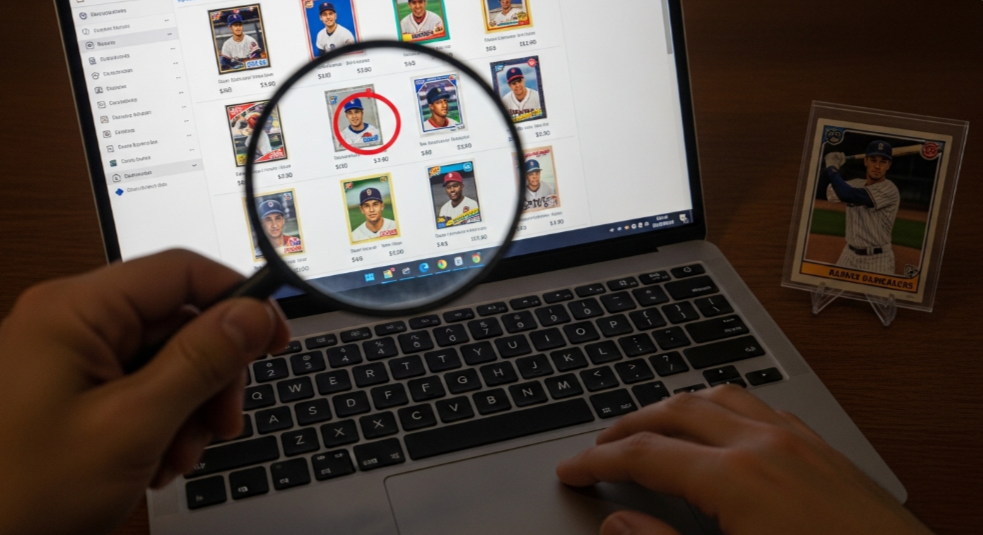
A lower offer is not automatically a bad offer.
Most online buyers are not paying as if they are building a private museum. They are thinking about resale, time, fees, shipping, returns, and how much work the collection will take after they buy it. If you want to sell baseball cards online, those costs exist whether you handle them yourself or let someone else absorb them.
That means a reasonable offer may come in lower than the number you hoped for, especially when:
- The collection includes bulk, along with stronger cards
- The buyer expects to sort, photograph, list, and ship everything
- Some cards may sit for a long time before selling
- Condition issues or grading uncertainty make resale slower
- The buyer is taking on the risk of disputes, returns, or weak demand
The mistake is assuming every discount is fair just because the buyer is “taking on the work.” Some discounts make sense. Some do not. That is why it helps to understand how we look at vintage cards before discussing value and why different selling routes can produce very different outcomes.
A Fair Convenience Offer and a Lowball Are Not the Same Thing
This is the part that matters most.
A fair offer usually has logic behind it. A weak offer usually leans on speed, confidence, and vagueness. A lot of people looking for the best way to sell baseball cards online never get this part explained clearly, and that is where bad decisions start.
A fair offer often looks like this:
- The buyer asks enough questions
- The stronger cards are clearly recognized
- The buyer accounts for condition, era, and card type
- The number lines up with the route being used
- The explanation makes sense, even if the offer is below retail
A weak offer often looks like this:
- one fast number
- very little explanation
- strong cards treated like filler
- bulk and key cards blended together
- pressure to accept before you do more checking
If you are trying to compare routes, how private buyers and local shops approach older collections helps make that difference easier to see.
The Biggest Mistake Sellers Make With Full Collections
A lot of online offers go wrong for one simple reason. The buyer is pricing a collection with mixed quality as if it were all the same.
Most real collections are uneven. They usually include:
- a few stronger vintage cards
- some decent supporting names
- a large amount of lower-value material
- cards that matter more because of the condition than the player
- cards that take time to sort properly
If the buyer treats the best part of the collection like filler, the offer can be too low even if the final number sounds respectable.
That is why we always come back to the same question: what are the key cards, and what is everything else? The better baseball card dealers online understand that difference quickly. The weaker ones often do not.
You do not need a complete spreadsheet before asking for help. But you do need to avoid letting the best cards disappear inside a big pile. That is exactly why the difference between bulk cards and key cards matters so much, and why selling the full collection versus breaking out stronger singles can change the number in a very real way.
Why Asking Prices Online Can Lead You in the Wrong Direction
This is where a lot of sellers talk themselves into confusion.
They look for how to sell baseball cards online, compare offers to random listings, and assume the highest visible number is the real target. That usually leads to bad decisions.
An asking price is not proof of value. It is only proof that someone listed a card at that number.
That is why random listings in baseball cards for sale online, or even active baseball card auctions online, can create false expectations. Some prices are high because the seller is testing the market. Some are old listings. Some never sell.
So when you are judging an offer, this is more useful than browsing random listings:
- Compare sold ranges, not just asking prices
- Compare cards in similar condition
- Compare raw cards to raw cards and graded to graded
- Separate single-card pricing from full-collection pricing
- Ignore obvious outliers unless the card really deserves it
This is also why similar baseball cards can bring very different prices even when they look close at first glance.
7 Signs the Online Baseball Card Selling Offer Is Too Low
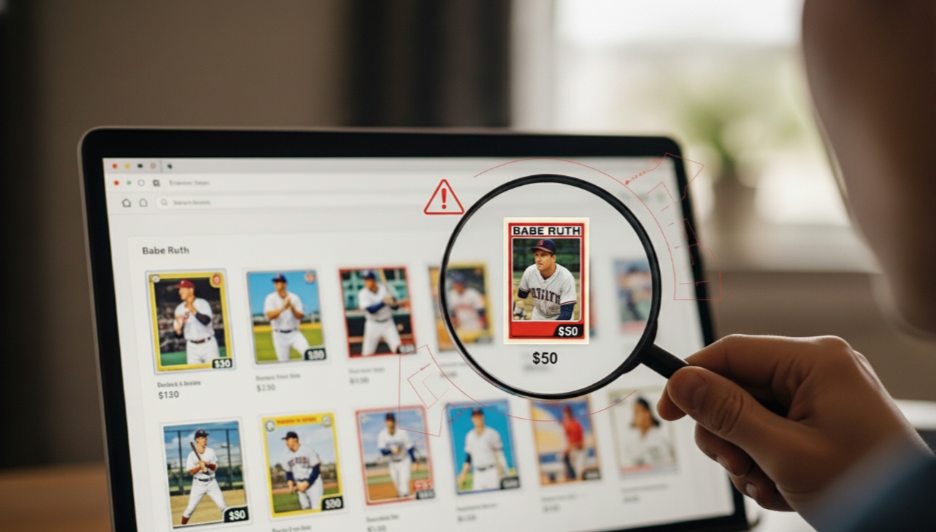
This is the simplest part of the whole process. If several of these show up at once, slow down.
The offer is more likely to be too low if:
- The buyer gives a number before seeing enough detail
- The strongest cards are not separated from the rest
- The buyer does not ask for front and back photos of better cards
- Hall of Famers, rookies, or scarcer issues are treated like ordinary cards
- The buyer keeps talking about “quick cash”, but not actual reasoning
- The explanation is thin, vague, or missing
- The number feels built for convenience only, not for the collection itself
A good buyer can still make a discounted offer. The difference is that a good buyer can usually explain the discount.
That is one reason a more direct route often helps. A slower, clearer decision path like the one in our private selling guide for vintage collections usually protects sellers much better than reacting to the first confident message that lands in their inbox. It can also save you from trusting a weak baseball card appraisal online estimate that never really addresses the better cards in the group.
What to Do Before You Reply to Any Online Offer
You do not need to overcomplicate this. Before you say yes, do these five things.
1. Pull out the strongest cards
Set aside:
- vintage stars
- rookies
- graded cards
- Hall of Fame names
- scarcer cards
- anything that clearly stands above the rest
2. Decide what is actually being offered on
Is the buyer pricing:
- one card
- a handful of stronger cards
- a partial group
- the whole collection
That changes everything.
3. Stop comparing the offer to fantasy retail
Use realistic market thinking, not hopeful listings.
4. Get another opinion if the number feels light
A second look can protect you from taking an offer just because it sounded certain. A careful online baseball card appraisal can help, but only if the stronger cards are shown clearly, and the collection is looked at in the right context. That is where pre-visit preparation tips help, because they show exactly what to gather before a proper review.
5. Think about speed versus outcome
Fast is not always bad. It just should not be the only reason a buyer gets a deep discount.
When a quick offer may actually be fair enough
Not every fast offer is a trap.
Sometimes a quick offer is good enough because:
- The collection has a lot of bulk
- The stronger cards were actually identified
- The buyer’s explanation makes sense
- You value convenience more than maximizing every dollar
- The offer fits the amount of work the buyer is taking on
- The collection is better suited to one clean deal than a long-selling project
This is where an honest review matters. Sometimes the right answer is to take the clean deal and move on. Sometimes the better answer is to pause and explore a stronger route first. A more personal process, like meeting with us privately to review the collection, helps make that call without the pressure that often comes with rushed online negotiations, especially if you are tempted to sell baseball cards online instantly just to get the deal done.
When a Private Review Is the Better Move
A private review usually makes more sense when:
- The collection has real vintage depth
- The buyer is lumping everything together
- The offer arrived too fast
- There are stronger raw stars or graded cards involved
- You are unsure about the condition, scarcity, or selling route
- You feel like the best cards are getting lost in the deal
That is especially true if you are still asking where to sell baseball cards online or looking for the best place to sell baseball cards online without being sure which route fits your cards best. Sellers in North Carolina, South Carolina, and Virginia often run into exactly this problem. The offer may sound easy, but easy is not always the same as fair.
If you are still wondering where I can sell my baseball cards for cash online, get clarity first through a private review from Baseball Card Roadshows and make the decision from a stronger position.