
North Carolina Card Shops vs. Private Buyers: Which Pays Better
If you are trying to sell a collection in North Carolina, the real question is not just who will make an offer. It is who will make the better offer for the kind of cards you actually have. A local shop can be convenient. A private buyer can sometimes be more flexible. The gap between those two offers can be small on one deal and very noticeable on another.
That is why this comparison matters. If you have been wondering who buys baseball cards, who buys old baseball cards, or which places that buy baseball cards are more likely to pay well, the answer depends on the collection, the buyer’s business model, and how fast you want to move.
What “Pays Better” Really Means Before You Compare Offers
A lot of sellers focus on one number only. That number matters, but it is not the whole story.
“Pays better” can mean:
- a stronger cash offer
- a better offer on a full collection
- more interest in bulk cards plus key cards
- less pressure to cherry-pick only the best items
- more time spent on condition, era, and current market demand
- a clearer explanation of how the offer was reached
If someone is offering fast cash for a few modern slabs, a local shop may be perfectly fine. If you have a mixed attic find, a large vintage group, or an estate collection, the buyer who takes time to review the whole picture often has the advantage.
How Card Shops Usually Price a Collection
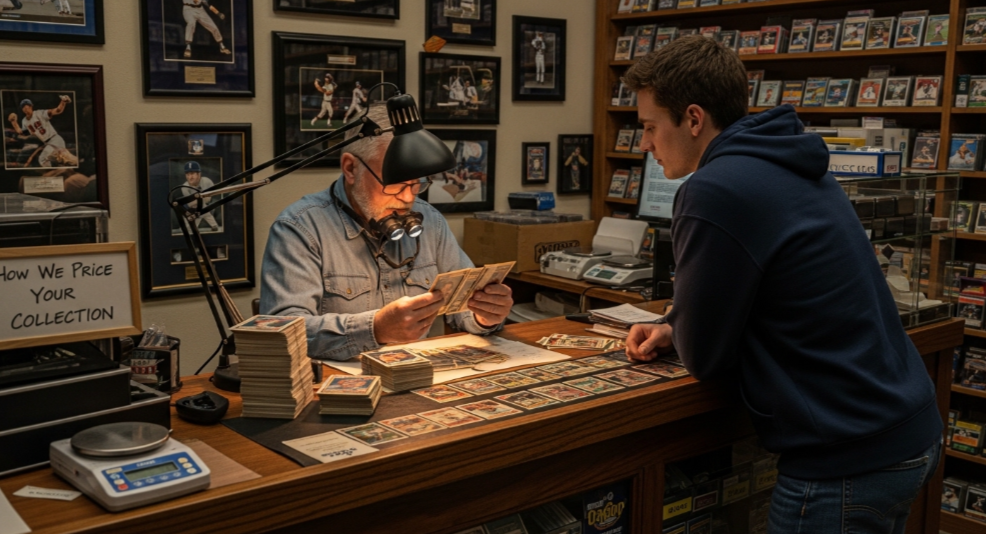
Most card shops are retail businesses first. They carry overhead, buy inventory that needs to move, and usually think in terms of resale margin. That does not make them bad places to sell. It just affects how they price.
A shop may be stronger when:
- The cards are easy to resell
- The collection is mostly modern
- The best items are already graded
- You want a quick local transaction
- trade credit matters to you as much as cash
A shop may be weaker when:
- The collection is large and mixed
- The value is spread across many boxes
- The buyer only wants the easiest pieces to move
- The offer is based on speed instead of a deep review
That is why one seller can walk away happy from a shop while another leaves money behind. A small group of liquid cards is not priced the same way as a full basement collection.
How Private Buyers Usually Value the Same Cards
A good private buyer is often working from a different angle. Instead of buying mainly for shop shelves, the buyer may be looking at the collection more directly, especially when vintage material is involved. That can lead to a better direct sale on the right deal.
At BaseballCard Roadshows, we focus on transparent valuation, private one-on-one appointments, and full-collection review so sellers are not left guessing which cards mattered and which ones did not. That becomes especially important when the collection includes older stars, mixed eras, unopened material, or a blend of graded vs. ungraded cards.
A private buyer usually becomes stronger when:
- The collection is older
- There are key cards mixed into a larger lot
- The seller wants the whole collection reviewed
- The buyer making the offer is also the final decision-maker
- Education and clarity matter before the sale
If you want to understand that route more clearly, this guide on selling your vintage baseball card collection privately helps explain what changes in a private setting.
When a North Carolina Card Shop Can Still Be the Better Choice
There are situations where a local shop makes sense and may even be the better fit.
That is often true when:
- You have a few modern singles
- You want to trade into a sealed product or other inventory
- The cards are already liquid in the local hobby market
- Speed matters more than maximizing every dollar
- You want face-to-face convenience close to home
For some sellers, that is enough. If the goal is simple and the cards are easy to price, a shop can do the job well.
But convenience has a cost. A fast counteroffer may not reflect the deeper value in a larger collection, especially if the stronger pieces are not obvious at first glance.
When Private Buyers Usually Pay Better
A private buyer often pays better when the collection needs more than a quick skim.
That includes:
- a full collection with mixed values
- older vintage cards
- family or inherited groups
- an estate collection
- boxes where bulk cards and key cards sit together
- collections where condition and player selection need real attention
This is where sellers often ask who buys baseball cards and assume the nearest option is the best option. Sometimes it is. Sometimes it is simply the easiest option to reach first.
If your cards may need more review, start with the North Carolina appraisal page and the article on how to tell if your vintage cards are valuable before accepting the first offer that feels convenient.
Bulk Cards, Key Cards, and Full Collections Change the Offer
This is where many sellers lose track of the real comparison.
A buyer looking at a few clean star cards may price them one way. A buyer looking at five long boxes, old binders, commons, inserts, sets, and vintage singles has a different job. The offer changes because the work changes.
Here is the practical breakdown:
- Bulk cards usually bring less excitement unless they support a stronger group
- Key cards drive attention fast, especially stars, rookies, and vintage standouts
- A full collection can be more valuable than its obvious highlights if the buyer reviews everything carefully
That is why a shop may offer on the top layer, while a stronger private buyer may spend more time understanding the lot as a whole.
The Hidden Cost of Speed, Trade Credit, and Fast Cash
Not every “better” offer is better in the same way.
A shop may offer:
- immediate convenience
- local familiarity
- possible trade credit
- a quick yes or no
A private buyer may offer:
- more time on review
- better attention to the whole collection
- direct access to experts
- more context around fair cash offer logic
Trade credit can look attractive, but it is not the same as cash if your goal is to sell. A fast offer can feel good, but speed should not hide weak pricing.
Questions To Ask Before You Accept Any Offer
Before you sell anywhere in North Carolina, ask a few direct questions:
- Are you buying the whole collection or only the best cards?
- How much weight are you giving to condition?
- Are you reviewing both bulk cards and key cards?
- Is this a cash offer or a trade-heavy offer?
- Are you the person making the final decision?
- Do you handle vintage material regularly?
- Will you explain why the offer came in where it did?
Those questions can tell you a lot before you hand anything over.
A Better Next Step for Sellers in North Carolina
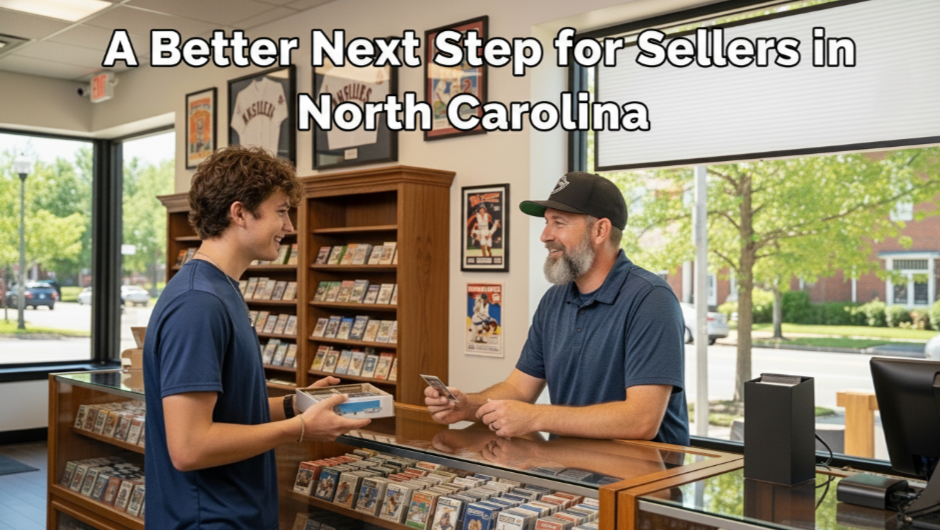
If your collection is vintage, inherited, mixed, or simply too important to price in a rush, a private review usually makes more sense than guessing. That does not mean every shop offer will be weak. It means you should understand what kind of buyer is best suited for your cards before you decide.
At Baseball Card Roadshows, we understand that sellers want honest guidance, not pressure. If you want a calmer way to compare your options, review what to expect when meeting us, learn more about our background, or use the contact page to set up a free appraisal and get a clearer answer before you accept a local offer.
FAQs
Do private buyers always pay more than card shops?
No. A local shop can be the better fit for quick-turn modern cards, trade-focused deals, or a small group of easy-to-move items. A private buyer often gets stronger on vintage, mixed, inherited, or larger collections.
If I am asking who buys old baseball cards, should I start locally first?
You can, but local is not always best for payout. Start with the route that fits your collection type. Older cards, mixed boxes, and family collections usually deserve more than a fast counteroffer.
What are the best places that buy baseball cards in North Carolina?
The best place depends on whether you have modern singles, vintage stars, a large full collection, or mostly bulk cards. The right buyer for one collection may be the wrong buyer for another.
Can a card shop offer trade credit instead of cash?
Yes, and that can work if you plan to keep collecting. If your goal is to sell, compare trade value against a real cash offer before deciding.
Why do offers change so much from one buyer to another?
Because buyers do not all use the same model. One may want a quick retail inventory. Another may focus on a broader direct sale, older material, or a more careful collection review. That changes how the cards are priced.