
Should You Sell Your Vintage Cards All at Once or in Batches?
Before you decide how to sell, we want you to feel calm and clear. “Vintage” often means history, family, and cards you have protected for years. So we are going to keep this simple and practical.
In this guide, we cover the real tradeoff: selling speed versus maximum value, and how to avoid the common mistake of selling the best cards first and getting stuck with the leftovers.
Start With One Question: Speed, Maximum Value, or Lowest Stress
Most decisions are easy once you pick your priority:
- Speed: You want money quickly, and you do not want months of messages, shipping, and returns.
- Maximum value: You are willing to do more work, wait longer, and handle more risk.
- Lowest stress: You want a fair outcome with a clean process and clear explanations.
If you are not sure what you have yet, start with our free appraisal options. Photo-based reviews are commonly handled in 24 to 48 hours, and formal written reports can take 5 to 7 business days. You can see the full details on our baseball card appraisals page.
What Selling All at Once Really Looks Like for Vintage
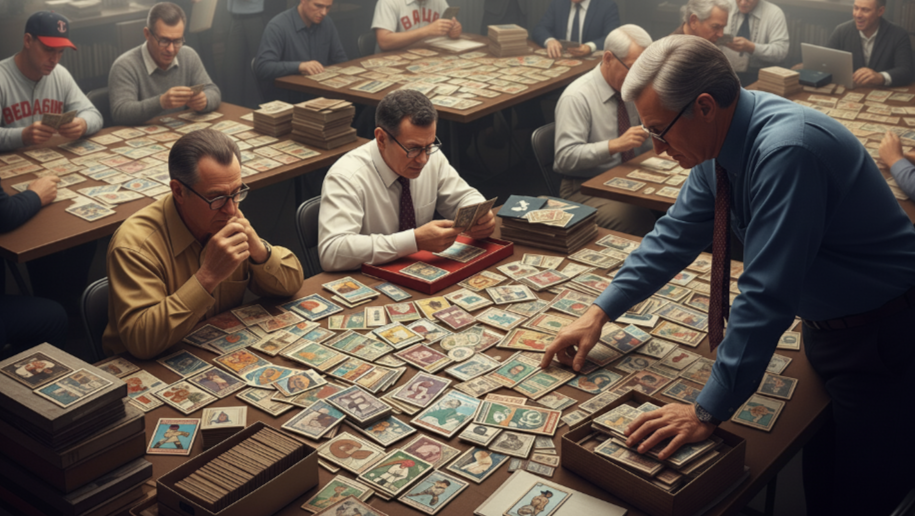
When people look for where to sell vintage baseball cards, many of them actually mean “where can I sell the whole thing without turning it into a second job.” Selling all at once is about one appointment, one evaluation, and one decision.
Selling all at once is usually a strong fit when:
- You have a true vintage baseball card collection, and you want to keep it intact
- The cards came from an estate or inheritance, and you want a clean plan
- You do not want to risk damage by shipping batches
- You would rather avoid listing and negotiating each card
The biggest advantage is simplicity. The tradeoff is that a buyer has to price the full workload, including the bulk and the slower cards, not just the stars.
If you want the honest difference between selling a full collection and selling singles, we break it down here: selling a full card collection vs singles.
Why Selling in Batches Can Raise Value, Then Create Work
Batch selling can absolutely work, especially for people who already know they have high-demand cards. This is the path many people choose when they are focused on selling vintage baseball cards.
Batch selling is often smart when:
- You can identify the top 20 to 100 cards with confidence
- You have graded slabs or clean raw stars that are easy to comp
- You have time to photograph, list, ship, and handle questions
- You are comfortable with fees and buyer disputes
But here is the catch. Batch selling creates more work and more risk. It also creates a common problem: you sell the easy winners early, then the remaining boxes feel harder to move.
We see this a lot with baseball cards, vintage card collections that include great early wins and then long runs of commons. The early sales feel good, but the leftover bulk can become a headache.
If you plan to batch, do it with structure, not impulse.
The Three-Batch Plan That Prevents Cherry-Picking Regret Later
If you want to sell vintage baseball cards in batches, we recommend a three-batch plan that protects your total value.
Batch 1: The key cards that carry the collection
This is your top pile:
- stars, Hall of Fame names, and key rookies
- scarce issues and oddball sets
- autographs and serial-numbered cards
- your cleanest high-grade vintage
Price these using comps from sold listings with tight matching (same year, set, card number, and condition).
Batch 2: Set builders and mid-tier lots
This is where most people lose money if they rush. The mid-tier sells best when it is organized:
- team lots
- player lots
- set runs
- near-complete sets
Batch 3: The true bulk exit plan
This is the part many sellers avoid, then regret later. Bulk can still move, but it needs a plan.
If you are unsure what counts as “key” versus bulk, our worth money checklist helps you sort quickly without overthinking.
When to Keep Complete Sets Together Instead of Splitting Them
Vintage sets can be priced differently depending on completeness and key cards.
Keep complete sets together when:
- The set is truly complete or nearly complete
- The condition is consistent across most cards
- The key numbers are present and not swapped out
- It is easier for a buyer to evaluate as a unit
Split sets when:
- The set is very incomplete
- The condition is wildly inconsistent
- The key cards are clearly the only high-demand pieces
- Your goal is speed, and you need cash sooner
If you are coming to a buyer appointment, keep sets in their original order. Our tips to prepare your baseball card collection before our visit guide shows how to do this without spending all weekend sorting.
Graded vs Raw Vintage Cards: When Grading Changes Your Plan
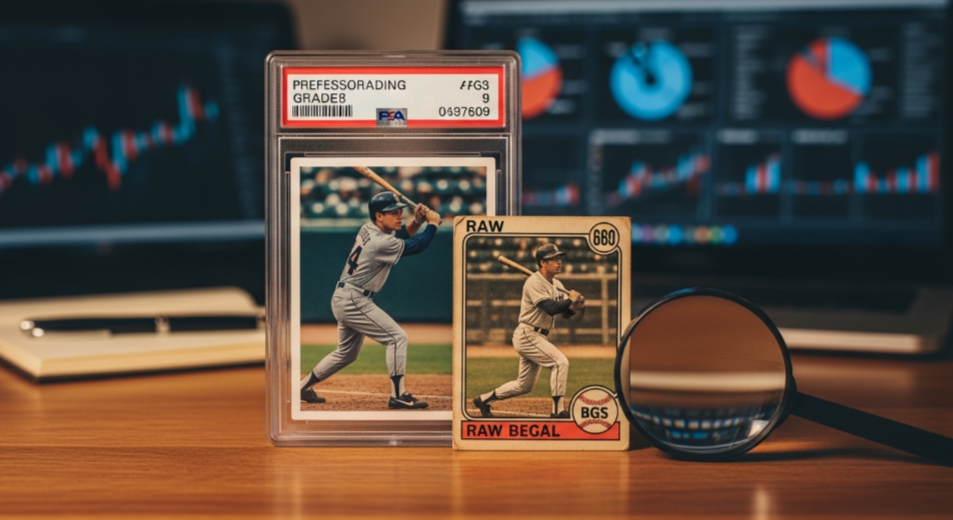
A lot of people assume grading is always the answer. Sometimes it is. Sometimes it wastes time and money.
Grading can help when:
- The card is already valuable, even raw
- The corners, edges, surface, and centering are strong
- The market pays a meaningful premium at certain grade levels
Grading usually does not help when:
- The card has creases, paper loss, heavy stains, or writing
- The card is common, and the grading fee eats into the upside
- You need money soon, and grading delays the sale
In other words, graded vs raw is not a belief system. It is a timing and math choice.
Fees, Time, and Risk: The Hidden Cost Behind Every Route
This is the part most sellers do not think about until they are already tired.
When you sell in batches yourself, you take on:
- listing time and constant questions
- packing, shipping, and damage risk
- platform fees and payment processing
- returns and disputes
- The stress of waiting for the right buyer
When you sell all at once to a buyer, you trade some upside for speed, privacy, and fewer moving parts.
If you are deciding between a direct buyer offer and other routes like consignment or an auction house, our guide on roadshows vs auction houses lays out the tradeoffs in plain language.
How We Help You Choose a Path and Get Paid Fast
At Baseball Card Roadshows, we do not push one path for everyone. Our goal is to help you choose the path that fits your life.
Here is what our process tends to look like:
- We review your top pile and the structure of the full collection
- We explain what is driving value and what is slowing value
- We outline options: sell all at once, sell in batches, or use a hybrid plan
- If you want to sell, we keep it private and straightforward
If you want to know what a private appointment feels like before you book one, read the meeting sports card for buyers.
If you want to see the service options we offer, you can review our services overview.
Quick Checklist Before You Decide All at Once or Batches
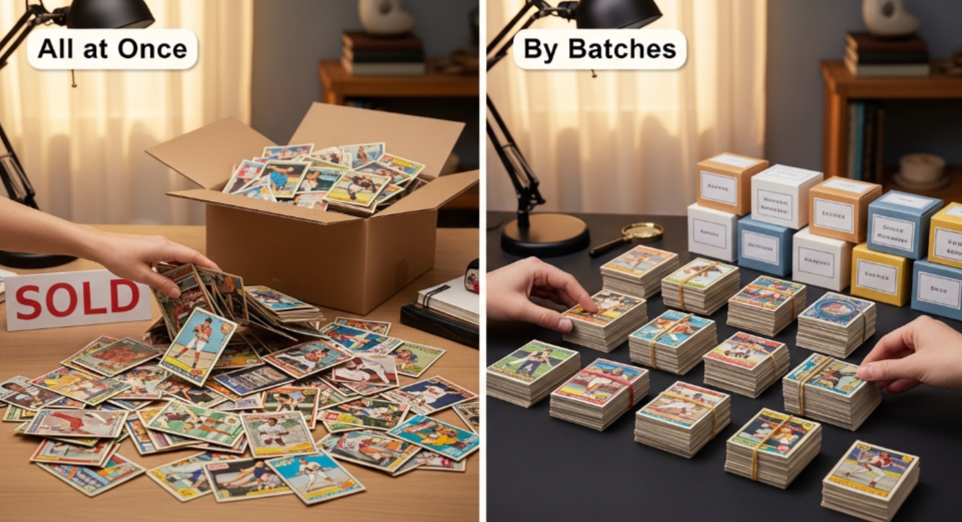
Use this quick checklist to decide your next move.
Choose all at once if:
- You want speed and simplicity
- You want one evaluation and one decision
- You do not want shipping and listing stress
- You are selling an estate or an inherited collection
Choose batches if:
- You enjoy selling and have the time
- You have clear key cards and clean comps
- You can handle fees, shipping, and disputes
- You have a plan for the bulk at the end
Hybrid is often the sweet spot:
- Sell the top 20 to 100 cards in a focused batch
- Sell the rest as lots or a full collection exit
If you want to start with photos and a summary, use our contact us page. If you want more guides like this, browse our blog.
Bottom Line: Pick the Plan That Fits Your Life, Not Just the Cards
If you have a vintage baseball card collection for sale, the right answer depends on your time, your stress tolerance, and how quickly you want the process done.
If you want to sell vintage football cards or if selling vintage baseball cards is new to you, do not start by listing everything. Start by building the three piles, taking good photos, and choosing a path you can actually finish.