
The Safest Way to Sell Valuable Baseball Cards in Person
Selling valuable baseball cards in person can be a great move. You avoid shipping risk, you can answer questions face to face, and you can leave with a clear decision the same day.
The downside is simple. In-person deals can go sideways if you treat them like a casual meetup. Our goal is to help you control the process so you feel safe, your cards stay protected, and your price expectations stay realistic.
Below is the exact approach we recommend before you meet anyone who says wanted to buy baseball cards or asks you to buy baseball cards from your collection.
Why In-Person Deals Go Wrong and How We Prevent Issues
Most problems come from one of these situations:
- You meet in a place that is too private, too dark, or too rushed.
- You bring too much at once and lose control of your cards.
- You talk price before confirming the exact card, condition, and version.
- You accept payment in a way that is unclear or hard to verify.
You can prevent all of this with a simple plan.
Choose a Public Meeting Setup That Keeps You Calm and Safe
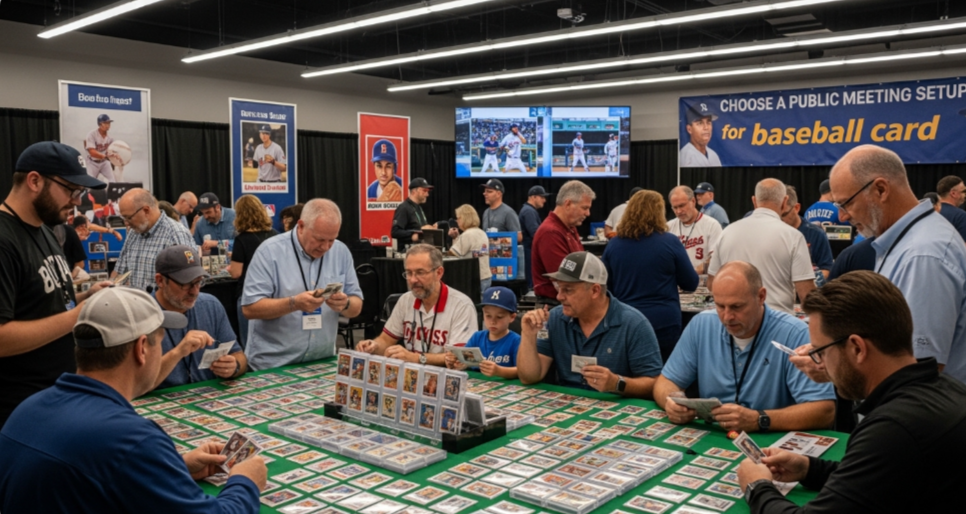
If you only remember one rule, use this. Meet in a busy, well-lit public meeting location where you can stay calm and keep your cards in your hands.
A safe setup usually includes:
- Daytime meeting, not late night.
- A spot with other people around.
- A table or counter where you can lay cards down without bending corners.
- A friend or family member with you, especially for high-value cards.
If someone pushes you to meet in a quiet place away from people, or they keep changing the location at the last minute, that is a red flag.
Protect Cards for Travel, So Condition Does Not Drop Before Pricing
Condition is money. Even small damage from travel can change what a buyer is willing to pay.
Bring your cards like this:
- Put your top cards in soft sleeves and top loaders.
- Keep top loaders together in a team bag, so nothing slides out.
- Carry graded slabs in a rigid case or a box that cannot flex.
- Avoid rubber bands on raw cards. Use dividers or small boxes instead.
If you want a simple prep list that works for boxes, binders, and slabs, use our guide on tips to prepare your baseball card collection before our visit.
Bring a Top Pile First So You Control the Whole Meeting
When sellers bring everything, the meeting can get messy. We recommend a top pile method.
Bring three groups:
- Top pile: 10 to 30 best cards, front and back visible, protected.
- Support pile: any graded slabs, autographs, or numbered cards.
- Remainder: the rest of the collection, kept in boxes or binders, is still organized.
This keeps the meeting focused. If the buyer likes the top pile, then you can move to the rest. If the buyer is not a fit, you pack up quickly without stress.
Use a Quick Comp Check So You Do Not Negotiate Blind
Before you walk into a meeting, do a quick check so you are not anchored to one random listing.
Use this simple comps method:
- Match the year, set, and card number.
- Match the same grade if graded, or the closest raw condition.
- Compare at least three recently sold listings.
- Use the typical range, not the single highest sale.
This step is also helpful if you are a buyer looking for where to buy baseball cards. When you rely on real sold prices, you avoid overpaying in any direction.
Do a Fast Condition Check on Raw Cards Before Any Price Talk
If the card is not graded, you must do a condition check in hand. Photos hide issues.
Check these quickly:
- Corners: whitening, soft tips, fraying.
- Edges: chipping, rough cuts.
- Surface: scratches, dents, print lines, stains.
- Centering: noticeably off.
- Back: paper loss, writing, wax marks.
If the price assumes a high grade but you see clear issues, you can walk away without regret.
Send These Photos First, So Serious Buyers Take You Seriously
A buyer can only work with what they can see. Good photos protect you from vague guesses, and they protect the buyer from surprises.
Before you meet, text or email:
- One wide photo of the full collection (boxes, binders, stacks).
- One wide photo of your top pile.
- Front and back of the 10 to 20 best cards.
- Close-ups of corners and surface on the best raw cards.
- Clear photos of slab labels for graded cards.
Use These Simple Rules to Prevent Mix-Ups and Card Swaps
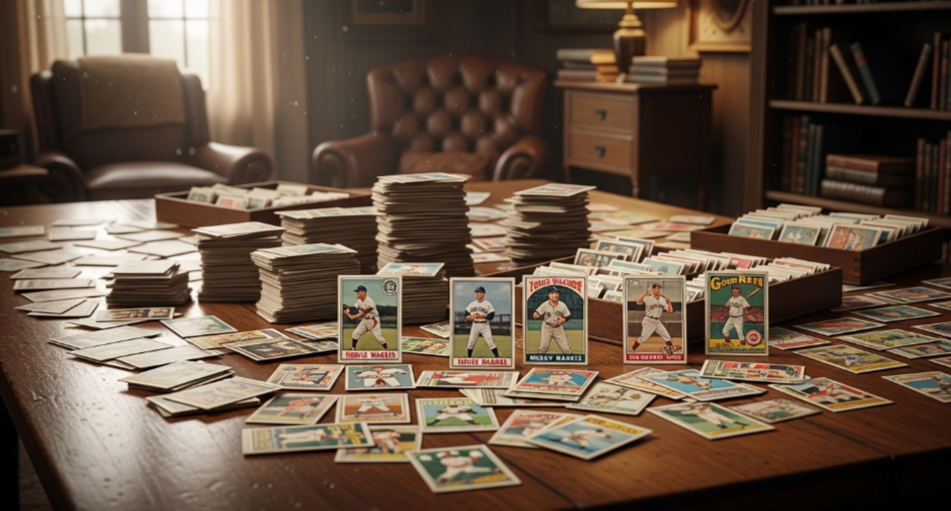
Most buyers are honest, but mistakes can still happen when cards move fast.
Use these rules at the table:
- Handle one card at a time for high-value pieces.
- Keep your top pile in your hand or in one designated spot.
- If the buyer wants to compare two cards, place them side by side and do not stack.
- Count the cards back into your holder before you move on.
- If you brought a full box, keep it closed until the top pile is done.
These habits protect you and keep the meeting calm.
Keep Payment Simple and Confirmed Before Cards Leave Your Hands
Most collectors want a clean deal. You can keep payment simple without getting technical.
Practical rules:
- Agree on the exact card and exact price before payment.
- Count cash calmly and confirm the amount once.
- If using an instant transfer, confirm the payment is received before you hand over cards.
- Make a simple receipt note in your phone with the date, card details, and amount.
If the buyer tries to rush the payment step, slow it down. A calm transaction is a safe transaction.
Red Flags That Mean You Should Walk Away Without Any Debate
Here are the red flags we see most often:
- They will not let you keep the cards in your hand.
- They ask to take the cards to a car “to look closer.”
- They keep changing the meeting location.
- They want you to ship after the meeting, even though the point was in person.
- They pressure you with “I have another buyer waiting.”
If you see two or more of these, leave. Your cards are worth more than the stress.
Why a Private Appointment Can Be Safer Than Random Meetups
If you have a high-value collection, meeting a random buyer can feel risky. A private appointment can reduce that risk because the process is structured and the evaluation is calm.
We explain what to expect step by step in our meeting with the sports card buyers page. If you want to see how our process works from start to finish, you can review our services overview.
We also meet collectors across multiple states. If you are in the Carolinas, you can start with our South Carolina coverage page. For timing and availability, our recently visited cities page helps you catch the next stop near you.
A Simple Checklist You Can Use Before Any In-Person Card Sale
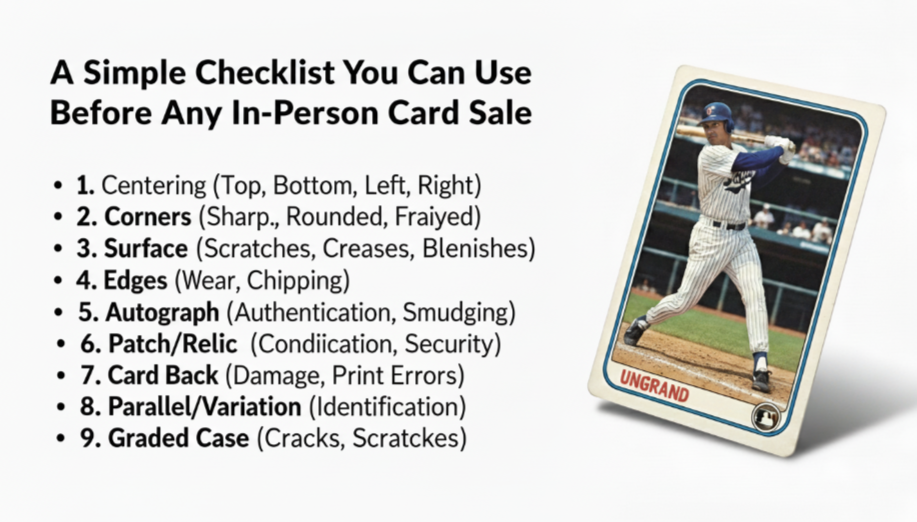
Before you go:
- Pull a top pile and protect it.
- Choose a safe public meeting spot.
- Bring one person with you if the cards are valuable.
- Do a quick comp check so expectations are realistic.
At the meeting:
- Keep the cards in your hands.
- Confirm card details, then confirm the price.
- Handle payment calmly and confirm it before you hand the cards over.
After the deal:
- Save a quick note of what you sold and what you were paid.
If you want more guides like this, browse our blog. If you are ready to start with photos or book a private appointment, contact us or visit Baseball Card Roadshows.