
What Buyers Look for in a Vintage Sports Card Collection
If you have a binder, a shoebox, or a closet full of older cards, you are already asking the right question: what will a real buyer care about first? Buyers do not start by counting how many cards you have. They start by looking for signals that the collection is worth the time and risk to evaluate, transport, and resell.
In this vintage sports card guide, we will show you what buyers look for in vintage sports cards so you can prep quickly, avoid missing value, and get a cleaner answer when you decide to sell.
What “Vintage” Means to Buyers and Why the Era Changes Value
Collectors use “vintage” in different ways. Buyers usually mean older eras that have steady demand, clearer scarcity, and a long history of sales. On our side, we focus heavily on collections from 1900 to 1972 because those years include many of the most liquid vintage baseball cards and key sets. You can see the kinds of collections we buy and how we evaluate them on our services page.
If you are holding old baseball cards from later decades, there can still be key cards, but value typically depends on specific rookies, true scarcity, and high-grade condition, not the era alone.
The First Five Signals Buyers Check in the First Two Minutes

When a buyer is in front of a table, these are the quick yes or no signals:
- Are there recognizable stars and Hall of Fame names?
- Is there any clear set structure, like numbered runs or organized binder pages?
- Do the cards look stored safely, dry, flat, and protected?
- Are there graded slabs or obvious key cards pulled aside?
- Does the seller know basic history, like where the collection came from?
Those signals matter because the buyer is estimating time. A clean, organized collection is faster to price and safer to handle, which often supports a stronger offer.
Complete Sets and Partial Sets That Buyers Value More Than Singles
Many sellers assume singles are all that matter. In reality, complete sets and strong partial sets can be a big deal, especially in true sports cards vintage eras.
Buyers like sets because:
- Key cards are easier to verify
- Set builders pay for completeness
- It reduces guesswork around what is missing
If you have vintage sports trading cards in binders, try not to reshuffle them right before an appraisal. Keeping cards in original order can help buyers spot patterns that change value.
Star Cards, Key Rookies, and Scarce Issues Buyers Pull First
When buyers sort a collection, they pull key cards first because those cards create the baseline. This is where most of the vintage sports cards’ value lies.
Buyers usually pull:
- Hall of Fame stars and iconic players
- True rookie cards for big names
- Scarce issues, short prints, and oddball sets
- Autographs and serial numbered cards (when present)
- Any high-demand cards that are already graded
This is also why you see prices that look like vintage sports card prices. A vintage sports card can only be priced correctly when the buyer confirms the exact version and condition.
People look best vintage sports cards to invest in, but buyers focus on demand, condition, and how easy a card is to resell.
If you want a fast way to see whether your top pile has real buyer signals, our worth money checklist helps sellers separate bulk from true key cards.
Why Higher-Grade Commons Can Raise a Whole Vintage Collection Today
Here is something many sellers miss: higher-grade commons can matter in vintage. In older sets, clean commons are not always easy to find, and set builders still need them.
Higher-grade commons add value when:
- The set is popular and actively collected
- The cards are consistently clean across the run
- There is minimal creasing, staining, or paper loss
- Centering and corners are strong for the era
This is one reason we recommend bringing the full collection, not just a small stack of stars. The quality of the average card changes the math.
Graded vs Raw Cards and How Buyers Price Risk in Person
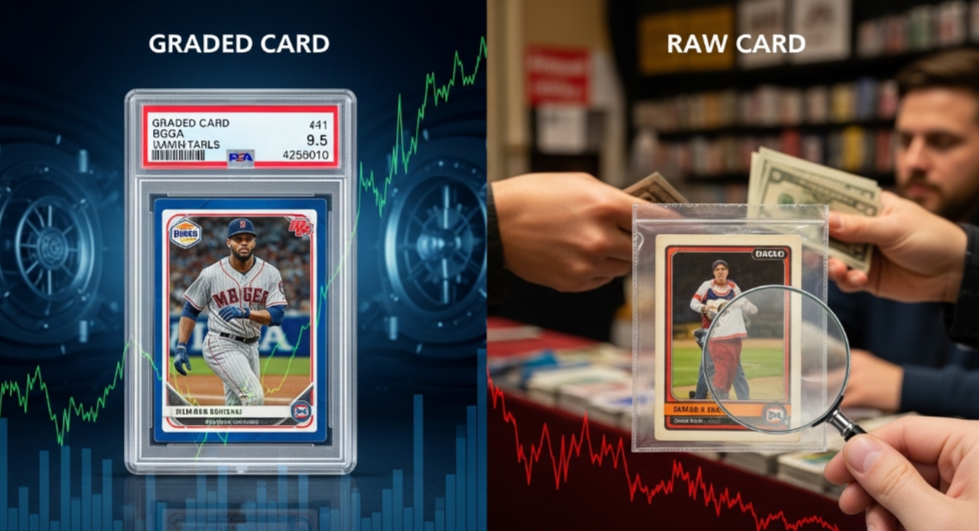
Buyers treat graded vs raw as a risk question.
- Graded cards are easier to comp because the condition is defined.
- Raw cards can hide flaws, so buyers build in more uncertainty.
- The same card can have very different values depending on small condition issues.
Buyers usually price below top online sale prices because they still have selling costs, time, and risk to cover, and raw tends to be discounted more than graded.
If you are deciding between routes like a direct buyer offer, consignment, or an auction house, our guide on roadshows vs auction houses lays out the tradeoffs in plain language.
The Condition Checklist Buyers Use for Fast, Consistent Pricing
Condition is the part that makes buyers slow down. These four areas drive most “why the offer changed” conversations:
- centering: Is the image noticeably off?
- corners: are they sharp or rounded, with whitening?
- edges: is there chipping or rough wear?
- surface: are there scratches, dents, stains, or print lines?
For vintage sport cards, a little wear is expected. Buyers are not looking for perfection. They are looking for the difference between honest age wear and damage that kills resale.
A quick seller tip that helps a lot: do not clean cards. Wiping, scrubbing, or trying to “improve” surface issues can create new problems and raise questions.
Provenance and Paperwork That Builds Trust and Speeds Offers
Buyers love a clean story. It does not need to be fancy. It just needs to be consistent.
Helpful provenance and documentation include:
- grading certificates or submission paperwork
- purchase receipts for higher-end items
- any old inventory list, even handwritten
- prior appraisals, if you have them
- a short history of where the collection came from
This is especially helpful when a collection includes more than one sport, like a vintage football card collection mixed with baseball cards from vintage eras.
Fast Prep Steps That Help Buyers Price Your Collection Accurately
If you want a buyer to price you fairly, make it easy to see what you have. You do not need to alphabetize the whole thing.
Do these steps instead:
- Pull a top pile of 10 to 50 best cards (front and back visible).
- Keep sets in order and do not shuffle binder pages.
- Put your best raw cards in sleeves and top loaders.
- Keep graded slabs together in a rigid box.
- Take clear photos of the full collection and the top pile.
We outline the best way to do this without over-sorting on our prep checklist page.
If you are deciding whether to sell locally in one appointment or piece it out over time, our guide on selling a full card collection vs singles explains what changes in the buyer’s process.
What Buyers Look for When You Say Vintage Sports Cards for Sale
When someone look vintage sports cards for sale, they are often looking for one of two things:
- a few high-value singles
- a larger collection with enough structure to be worth traveling for
If you are selling, your job is to show which one you have. That is why a top pile plus a wide shot of the full collection is so effective. It answers the buyer’s first question: Is there enough here to justify the time?
A Quick Note on Other Vintage Collectibles People Ask About
We sometimes see mixed collections that include non-sports items, like old sports cards stored alongside vintage playing cards for sale. The buying logic is similar, but the buyer market is different.
If your collection is mixed, it helps to separate sports from non-sports before you reach out.
A Safe Next Step If You Want a Clear Answer and Options
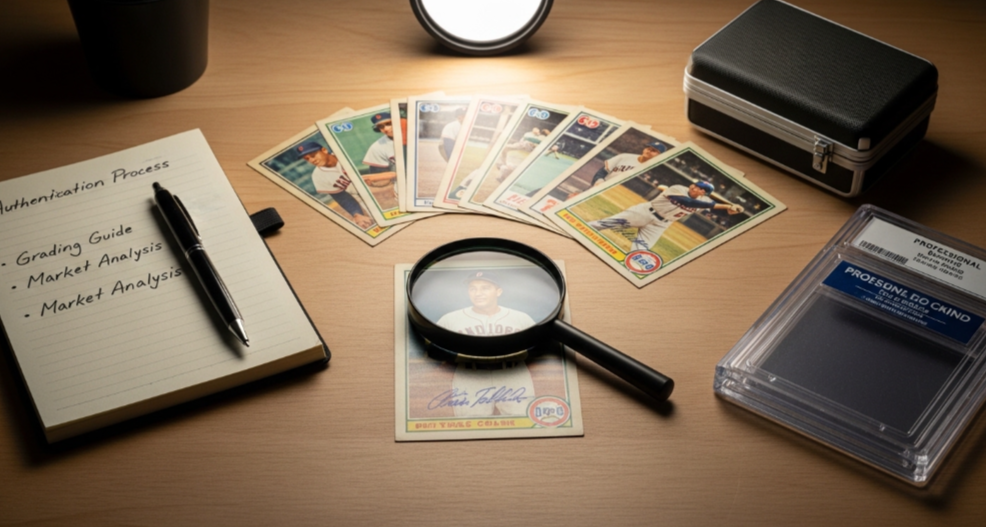
If you want an appraisal first, we can usually turn around a free photo-based review in 24 to 48 hours, and more formal written work typically takes 5 to 7 business days. Those timelines are explained on our baseball card appraisals page, or for more information, visit Baseball Card Roadshows.
If you prefer a private, in-person evaluation, here is what to expect during a meeting with sports card buyers.
And when you are ready to send photos or book a time, the simplest next step is our contact us page.
Quick Recap: The Buyer Checklist You Can Use Today Anytime
If you want a simple summary, here is the buyer lens in one list:
- True vintage era and steady demand, especially vintage baseball cards
- Sets that stay together, including complete sets and strong partial sets
- A top pile of star cards and key rookies
- Condition signals, especially centering, corners, edges, and surface
- Proof and history, like provenance and documentation
- Clean storage and an organized structure that saves time
If you build a top pile and keep your sets in order, you will get a clearer, faster answer, whether you are selling the whole collection or just trying to understand what you have.