
If you have boxes of cards at home, you have probably heard two phrases that feel like opposites: “This is mostly bulk” and “There are some key cards in here.” Both can be true at the same time. Most collections are a mix of key cards and bulk sports cards, and the final number comes down to how a buyer can realistically resell what you have.
We buy collections every week, so we are going to explain the buyer math in plain terms. You will learn why sports cards in bulk are priced differently, how buyers pull and price key cards first, and what you can do so your best cards do not get missed.
The Quick Answer Buyers Use to Price Any Collection Fast
Buyers usually think in buckets, not in thousands of individual prices.
- Key cards get priced close to a real fair market value because they are easier to move.
- Sports cards in bulk get priced with a bigger discount because it takes time, labor, and risk to turn them into money.
That discount is not a “lowball” by default. It reflects sorting, supplies, selling fees, and the reality that most bulk cards do not have steady demand as singles.
Bulk Cards Versus Key Cards: What Buyers Mean by Each
When someone says bulk baseball cards, they usually mean the long boxes of commons, duplicates, and base cards that do not have strong demand as singles. That does not mean they are worthless. It means they sell differently.
Key cards are the opposite. Buyers pull and price these first:
- rookies with steady demand
- stars and Hall of Fame names
- serial-numbered cards and true short prints
- clean autographs and patch autos
- high-grade vintage
- graded slabs that already have a market
Collections can also include other sports. The same logic applies to bulk football cards. A few high-demand rookies and numbered parallels carry value, and most base cards are priced as bulk unless demand is unusually strong.
The Three Buckets That Decide Your Final Offer Number Every Time
Most serious buyers price collections in three buckets:
1) Key cards
These are priced using good matching and recent sales.
2) Mid-tier lots
These are sellable, but slower, so they are grouped into player lots, team lots, or set lots.
3) Bulk
This is the true bulk pile, priced with a sample and a bulk discount.
If you want a quick way to spot whether your collection has real key-card potential, our 5-minute worth-money checklist is a simple starting point.
How Buyers Use Comps Without Overpaying or Undervaluing Cards Today
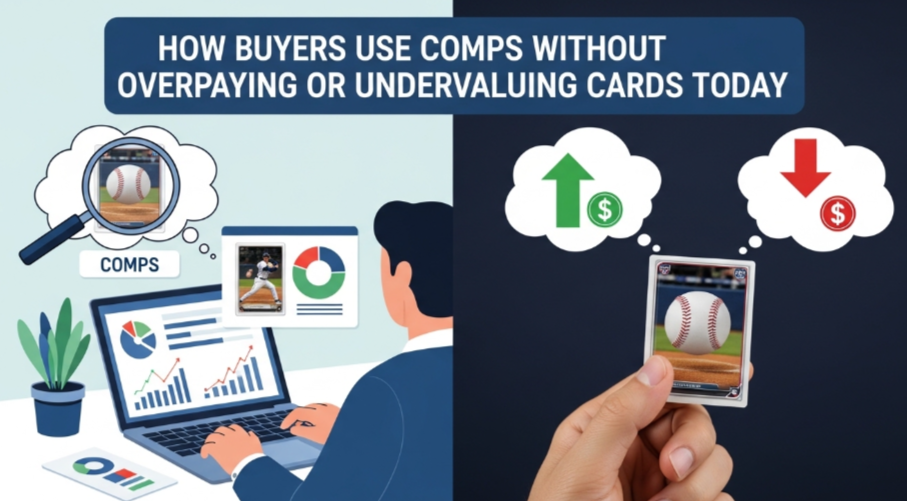
Most pricing problems come from bad matching. A buyer does not want one flashy sale. They want repeatable pricing.
When buyers check comps using sold listings, they try to match:
- the exact year and set
- the exact card number and any variation
- the same grade, or the closest raw condition
- the same version (base vs parallel)
- three to ten recent sales, not one outlier
This is also where “cheap” can trick people. A card can look like a deal, but if it is the wrong version or in worse condition than your mental comp, you can still overpay.
Why Bulk Gets Discounted: The Hidden Costs Buyers Must Cover
A key card is liquid. Bulk is work.
Bulk pricing accounts for:
- hours of sorting and pulling
- supplies like sleeves, top loaders, and boxes
- platform fees and payment processing if the buyer sells online
- shipping costs and damage risk
- returns, disputes, and slow sell-through
- The fact that most bulk will never sell as singles
So when people look for where to sell bulk sports cards or the best place to sell bulk sports cards, the real answer is about tradeoffs. If you want maximum money, you do more of the selling work yourself. If you want speed and simplicity, you accept a bigger bulk discount.
This is also why some sellers look for bulk sports card buyers. A buyer takes the workload off your plate, but the offer reflects that workload.
The Bulk Math Sampling a Lot of Sports Cards the Right Way
Nobody wants to price 10,000 commons one by one. Buyers use a sampling method for a lot of sports cards.
A simple, real-world bulk sample looks like this:
- Pull small stacks from multiple boxes or binder sections
- estimate how much is true sports cards bulk versus mid-tier cards
- adjust for condition and organization
- Look for signs of sets, runs, and duplicates
If the sample is mostly common, the buyer will treat it as true bulk. If the sample includes consistent rookies, inserts, or set structure, the bulk number rises.
This is why “I have a huge box” is not enough information. What is inside the sample matters more than the box size.
What Raises Bulk Sports Card Prices More Than Most Sellers Think
Bulk is worth more when it is easier to process and resell. These factors often raise the bulk number:
- cards sorted by sport, year, or set
- dry storage with minimal damage and odor
- lots are already grouped into teams or players
- near-complete sets with key numbers still present
- a steady mix of rookies, inserts, and parallels
- better-than-average condition across the box
If you are planning to appraise sports cards for a sale, this is where small prep choices can change the outcome. Our prep checklist before our visit shows how to protect the best cards and keep the rest organized without spending all weekend sorting.
When Buying Sports Cards in Bulk Makes Sense for a Buyer
If you are shopping the other side of the market, buying sports cards in bulk can be smart when:
- The seller has not pulled the key cards
- The bulk is sorted by set or year
- You know what you are hunting for
- You can process volume efficiently
But if you are paying bulk money like it is a stack of key cards, you will overpay. That is true whether you are looking for where to buy bulk sports cards locally or browsing bulk sports cards for sale online.
How to Sell Bulk Sports Cards Without Leaving Key Value Behind
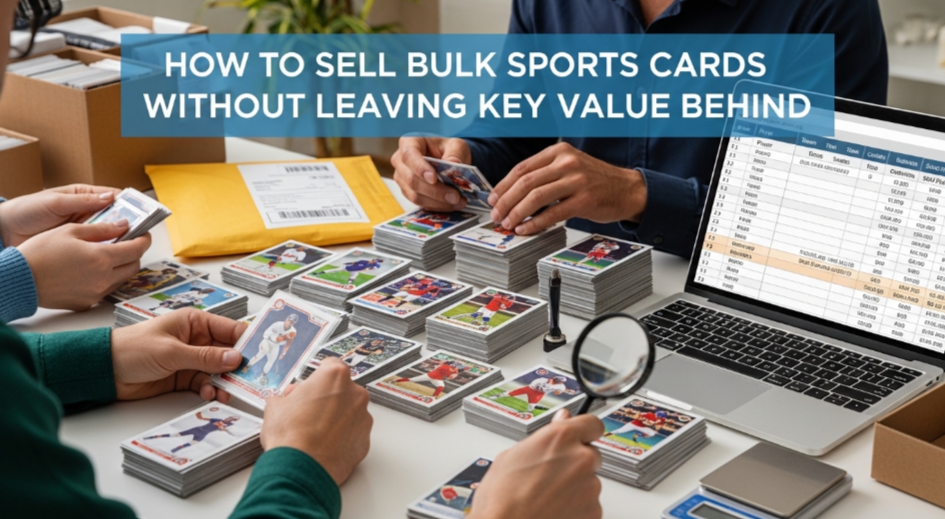
If your goal is to sell bulk sports cards without regret, most sellers do best with a hybrid approach:
- Pull the key cards and sell them separately.
- Group mid-tier into lots that are easy to price and move.
- Sell the rest as true bulk.
This approach helps you avoid the classic mistake: selling a full box for a bulk number, then realizing a key rookie was sitting in the middle.
If you are not sure what a buyer meeting feels like, our guide to what a buyer meeting looks like explains the process in plain terms.
What to Bring to a Collection Appraisal So Nothing Gets Missed
Whether you are selling or just trying to understand value, a clean appraisal setup helps.
Bring:
- a top pile of 10 to 50 best cards, protected
- any graded slabs together
- boxes and binders kept in original order
- any receipts, grading paperwork, or prior notes
If you want to understand what our process covers, you can review our services before you book anything.
A Simple Next Step If You Want a Clear Offer
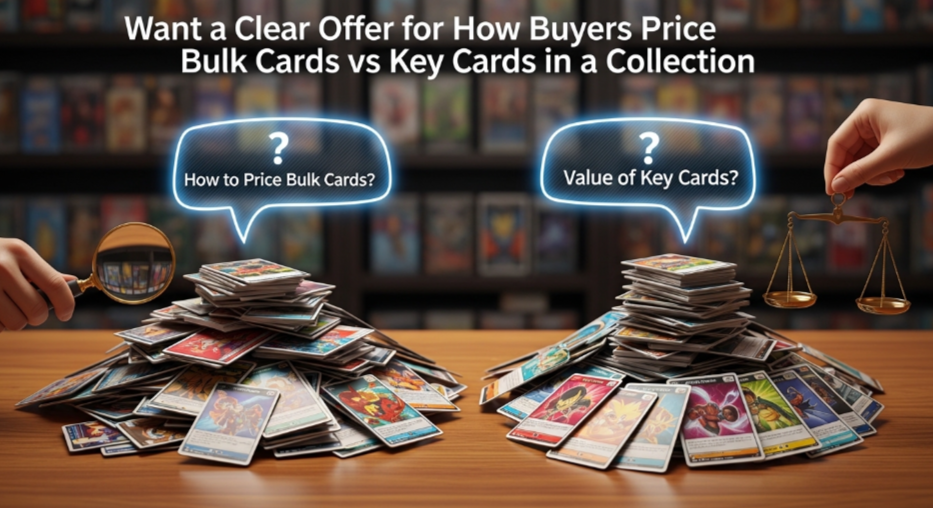
If you have been looking to buy sports cards cheaply, you already know prices swing wildly. The fastest way to stop guessing is to get a clear bucket-based evaluation.
If you want to reach out with photos or ask about a private appointment, visit Baseball Card Roadshows or use our contact us page. If you want more guides like this one, browse our blog.