
Why Tape Marks Can Change A Baseball Card Review
Tape on an old card may look like a small issue, especially if the player’s name is strong or the front still looks good. But during a baseball card appraisal, tape marks can change how the card is reviewed. They can affect baseball card condition, eye appeal, grading potential, buyer trust, and even the best-selling route. If you have vintage baseball cards with tape, old stickers, or sticky residue, do not peel anything off before getting the card checked.
At Baseball Card Roadshows, we help sellers review raw cards, graded cards, tape-marked cards, inherited collections, and full vintage collections before they decide what to sell, keep, grade, or include in a larger offer.
Tape Marks On Baseball Cards Are More Than A Surface Problem
A tape mark is not just a small stain. It can affect how the card looks, how buyers trust it, and how much risk an appraiser sees during the review.
Tape may leave:
- adhesive residue
- yellow or brown staining
- surface pulls
- paper loss
- gloss changes
- dirt trapped in sticky areas
- damage on the front or back
That matters because the value of a baseball card collection depends on more than the player’s name. A card with tape damage may still be worth reviewing, but the condition must be assessed honestly. A condition-focused baseball card appraisal can help separate normal age wear from damage that changes the value conversation.
Do Not Peel Tape Or Old Stickers Before An Appraisal
This is the biggest thing sellers need to know. Do not pull tape off an old baseball card before review. What looks like a quick fix can make the damage worse.
Peeling tape can cause:
- paper loss
- missing image areas
- pulled ink
- rough surface patches
- new creases
- larger stains
- back damage
This is especially risky with pre-1972 baseball cards, tobacco cards, early gum cards, and older Topps, Bowman, or Fleer cards. If the card is already fragile, peeling tape can turn a repairable question into permanent damage.
If the card came from a box, album, or family storage, leave it as-is. Our guidance on old cards that came out of storage is built around protecting the card first, not trying to improve it at home.
Tape On The Back Of A Card Still Matters
Some sellers think tape only matters if it is on the front. That is not true. Tape on the back can still affect the review because the back is part of the card’s condition.
The back can show:
- old tape strips
- mounting marks
- scrapbook residue
- handwriting
- paper thinning
- glue stains
- sticker damage
A card with a clean front and tape on the back may still have value, especially if it is a key player or scarce issue. But the tape needs to be shown clearly before pricing. If you are wondering where to get baseball cards appraised, make sure to include front-and-back photos from the start.
Adhesive Residue Can Lower Eye Appeal And Buyer Confidence
Adhesive residue can change how a card feels and looks. It can collect dirt, darken with age, or leave a shiny patch where the original surface has changed. Even when the card is not torn, residue can affect buyer confidence.
This can matter when selling:
- Top-selling baseball cards
- Hall of Fame cards
- Rookie cards
- Older complete sets
- Cards from inherited collections
A buyer may still want the card, but they need to know what they are buying. That is why clear photos and honest condition notes matter. If you plan to list cards online, our advice on how to protect value when selling cards online can help you avoid trust problems before a sale.
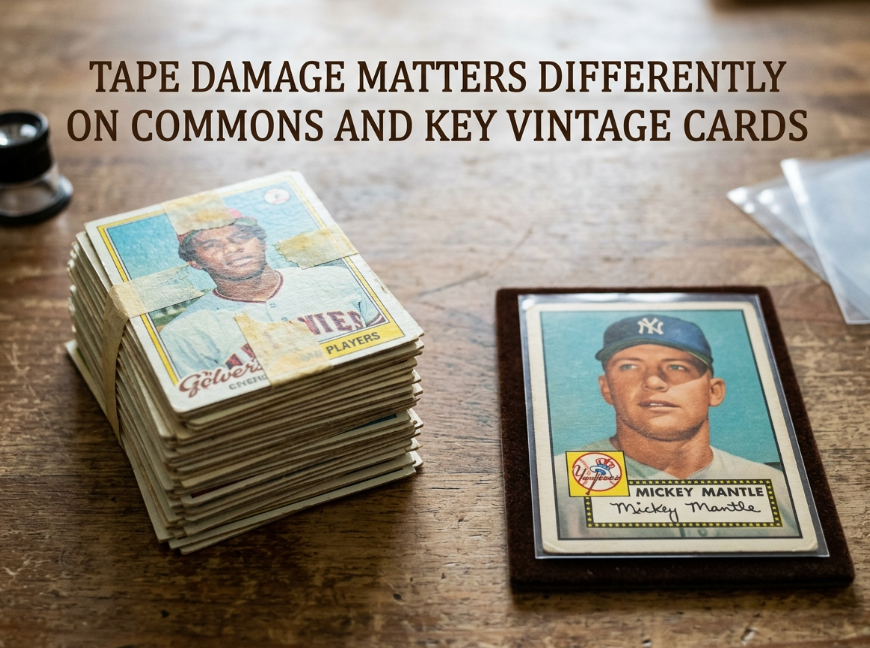
Tape Damage Matters Differently On Commons And Key Vintage Cards
A common card with heavy tape damage may have limited value. A rare card or major Hall of Fame card with tape damage may still deserve attention. The same flaw does not affect every card the same way.
Tape marks should be reviewed alongside:
- player demand
- card year
- card number
- rarity
- set importance
- grade potential
- front and back condition
- whether the card is part of a set
A Mickey Mantle, Hank Aaron, Jackie Robinson, Willie Mays, or other major player card may still be worth reviewing even with damage. The same is true for most sought-after baseball cards, scarce high numbers, and certain baseball cards worth money from older sets.
A deeper vintage card value check can help sellers understand why condition is only one part of the review.
Tape Marks Can Make Online Selling Harder Without Clear Photos
If you have baseball cards to sell, weak photos can create problems fast. Tape marks should never be hidden, cropped out, blurred, or described vaguely.
Show:
- full front photo
- full back photo
- close-up of tape marks
- close-up of residue
- edges and corners
- any grading label, if graded
- photos of the full collection, if there are many cards
This matters for anyone asking how much baseball cards sell for or trying to decide where to sell them. A buyer will judge the card more fairly when the condition is clear. Hiding tape damage can lead to lower trust, disputes, or a weaker offer later.
Scrapbook And Album Cards Need Careful Private Review
Many tape-marked cards come from scrapbooks, albums, school projects, family displays, or old collector binders. Sometimes the card was taped to a page decades ago. Other times, a seller finds cards stuck inside old paper, plastic sleeves, or homemade albums.
Do not rush to remove them.
A private review may help when cards are:
- taped to scrapbook pages
- attached to old paper
- stuck inside albums
- held by old photo corners
- stored with glue or stickers nearby
- mixed with family notes or estate items
These cards should be handled slowly. If the collection includes baseball card sets for sale, old albums, or family-kept cards, we can help review the entire collection before selling, so the stronger pieces are not damaged during sorting.
Grading May Still Be Possible, But Tape Can Limit The Outcome
A tape-marked card may still be reviewed, but grading expectations need to be realistic. Tape, staining, paper loss, and surface damage can affect how a card is viewed by grading companies and buyers.
That does not mean the card is worthless. Some graded and ungraded cards with condition issues still sell because the player, year, scarcity, or set matters. But grading everything without advice can waste time and money.
Before grading, ask:
- Is the card important enough?
- Is the tape on the front or back?
- Is there paper loss?
- Is the card rare or common?
- Would selling raw make more sense?
- Is it part of a stronger collection?
If you have graded baseball cards for sale or raw cards with damage, our practical pre-sale grading guidance can help you decide what deserves more attention.
Tape-Marked Cards Should Be Reviewed With The Full Collection
A single damaged card does not tell the whole story. Tape marks may appear on one card while the rest of the collection includes clean stars, commons, sets, or vintage material.
The full collection may include:
- Hall of Fame cards
- rookie cards
- high-grade commons
- complete or partial sets
- tobacco cards
- early gum cards
- older football, basketball, or hockey cards
- vintage sports memorabilia
If you have a card collection for sale, do not judge the whole group from one damaged card. Our seller prep for a careful card review can help you organize the collection without overhandling it.
North Carolina Sellers Should Review Tape-Marked Baseball Cards Before Selling
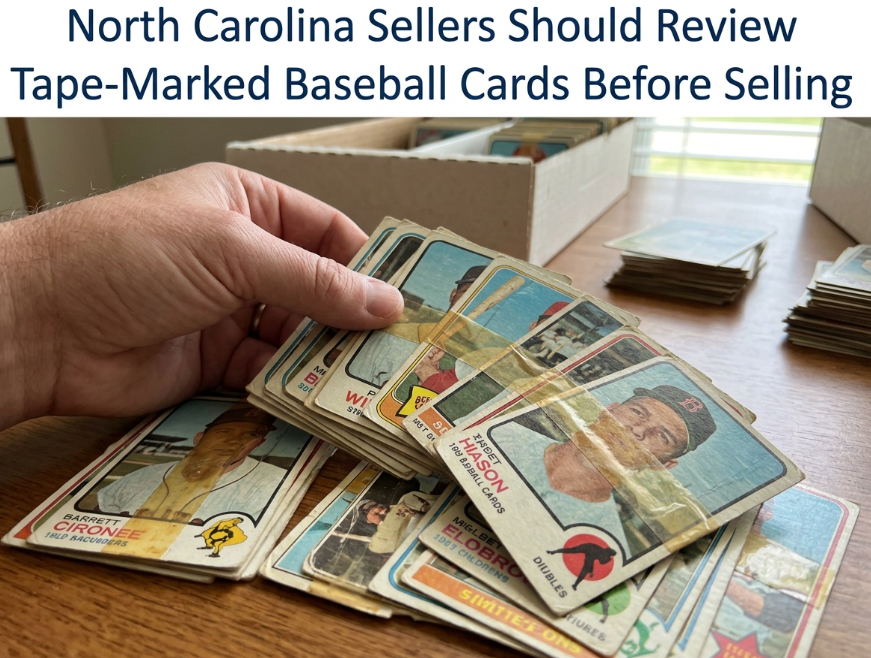
If you are in North Carolina and asking where I can get baseball cards appraised, a private review can help before you ship cards, list them online, or accept the first offer.
Baseball Card Roadshows helps sellers in Charlotte, Raleigh-Durham, Greensboro, Winston-Salem, Fayetteville, Wilmington, Concord, Asheville, Wilson, Greenville, Elizabeth City, Goldsboro, and nearby areas.
Our North Carolina baseball card review appointments are useful when a collection includes tape-marked cards, older stars, cards worth something, estate cards, inherited collections, or cards that may still deserve a cash offer after review.
What To Have Ready Before Asking About Tape-Marked Cards
You do not need a perfect price sheet. A few clear details are enough to start.
Before asking for a free baseball card appraisal, prepare:
- front and back photos
- close-ups of tape marks
- notes about where the card was stored
- photos of albums or scrapbook pages
- pictures of the full collection
- any graded card labels
- any family or estate history
- whether you want to sell one card or the full group
If you are unsure about baseball card appraisal online, clear photos are the best first step. Do not remove the tape to make the photo look cleaner.
Get A Clear Review Before Removing Or Selling Anything
Tape marks can change a baseball card review because they affect condition, buyer trust, grading potential, and the best-selling route. But tape damage does not always mean a card has no value. The player, year, set, rarity, and full collection still matter.
At Baseball Card Roadshows, we help sellers with baseball card appraisals, review collections, and private sale advice. If you want to sell older cards privately with less guesswork or start with a direct appraisal request, we can help you understand what to do before removing tape, listing cards, or accepting an offer.